The new Lyon-Turin railway line is a strategic European infrastructure that will transform travel between Italy and France. It is a new railway line dedicated to freight and passenger transport, which will be faster, more sustainable and better integrated into European networks.
Understand the Lyon-Turin project
This 270-km-long line has one central element: the cross-border section, managed by TELT, and its key infrastructure, the Mont-Cenis Base Tunnel, which, with its two 57.5-km-long twin-tubes, will be the longest railway tunnel in the world.
The reasons for the project
The new Lyon-Turin line contributes to the realisation of the new European transport network, overcoming the obstacles related to the railway configurations of the different countries. The new line will improve freight transport and the mobility of people, contributing to the progressive reduction of CO2 emissions. This new, innovative and sustainable infrastructure will bring numerous benefits.
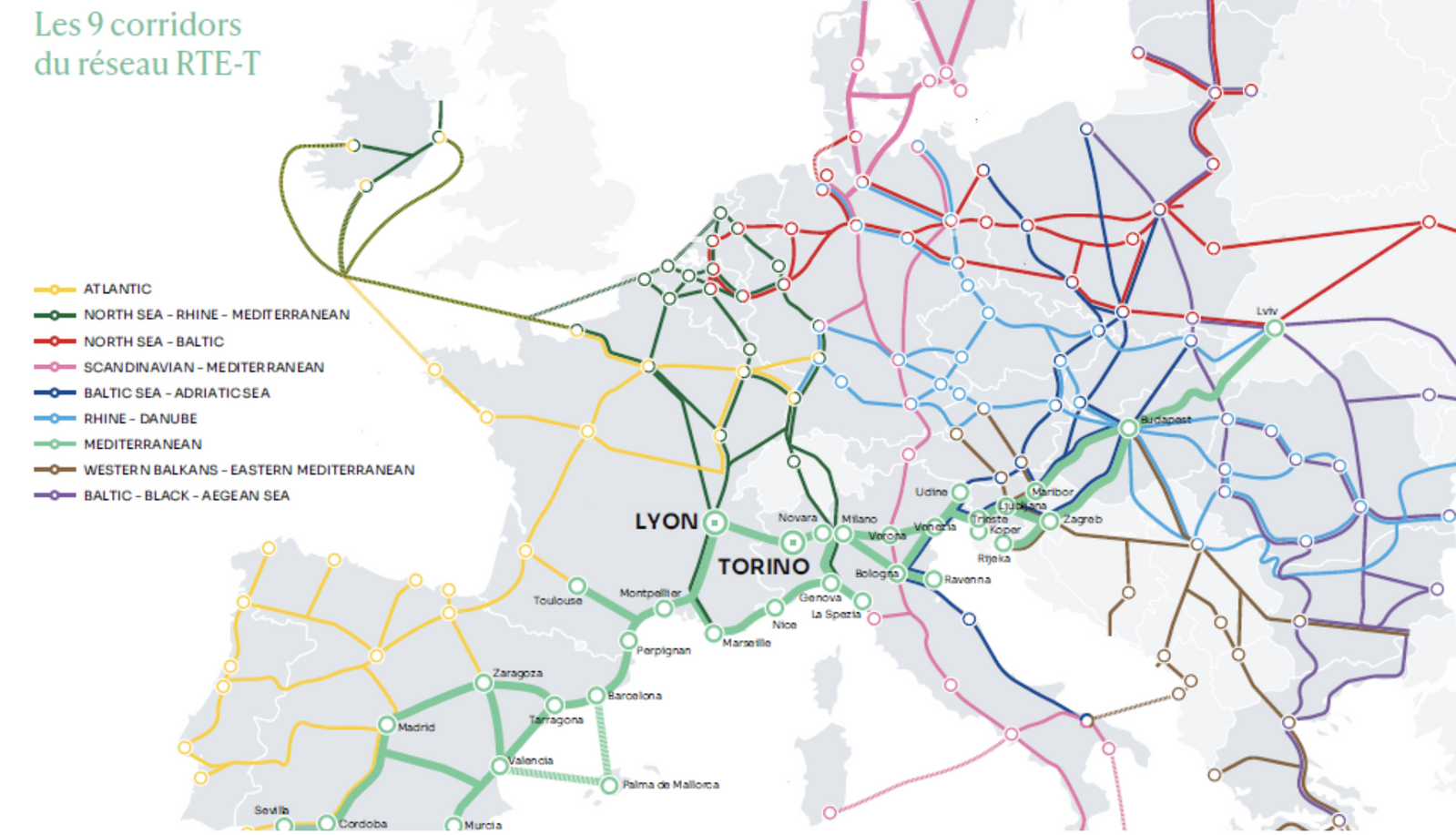
The TEN-T network is the set of trans-European transport infrastructures planned by the European Union to encourage the movement of people and goods. It consists of 9 Corridors, including the Mediterranean Corridor of which the Lyon-Turin is part. The TEN-T network will connect different areas of Europe in a single, integrated, multimodal transport network.
The Lyon-Turin line, a project comprised of three parts
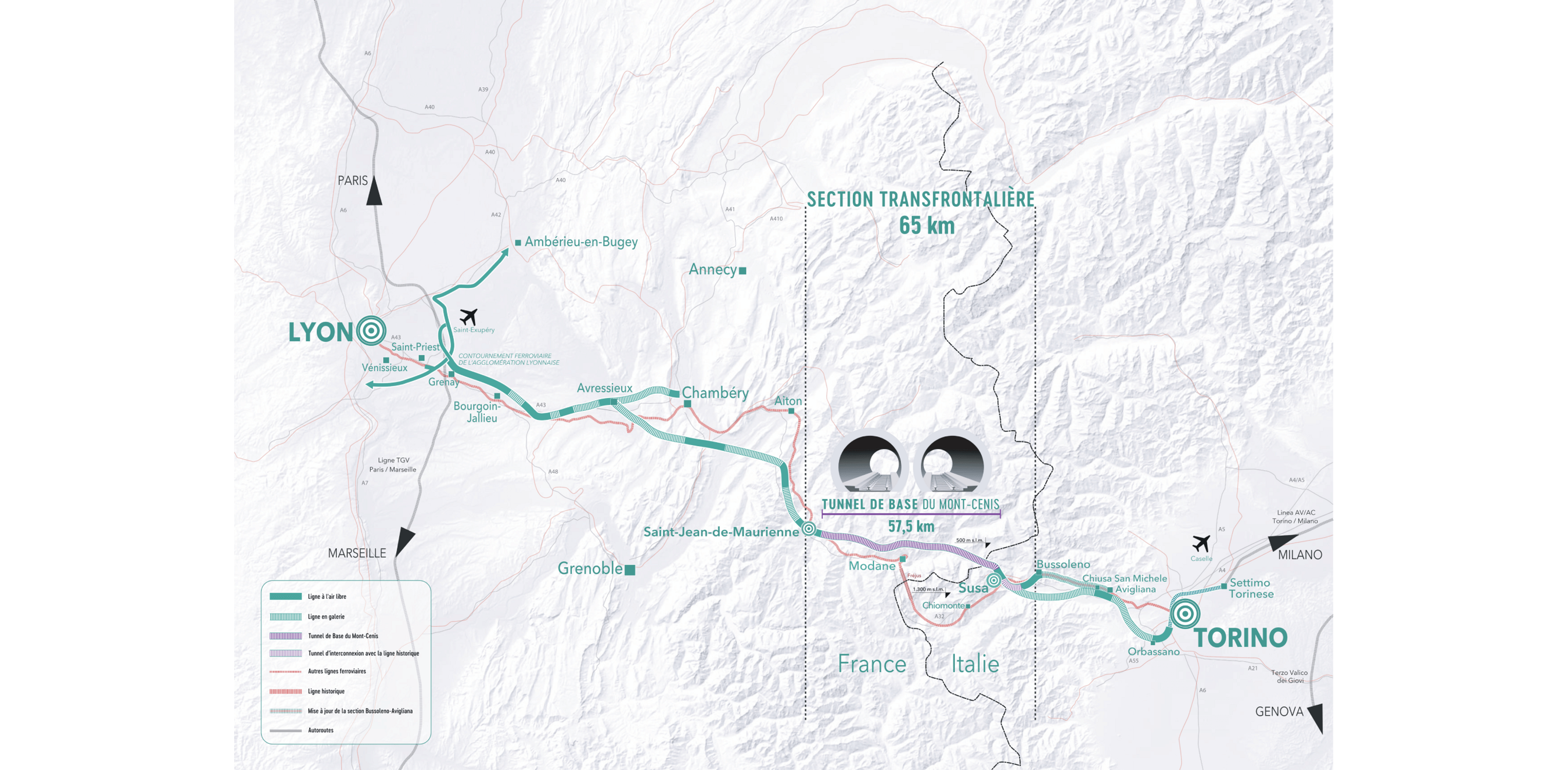
The railway line is a project comprised of three parts:
1
The about 160-km-long French section from Lyon to Saint-Jean-de-Maurienne, entrusted to the French railway operator SNCF Réseau. Find out more
2
In the middle, the cross-border section from Susa/Bussoleno to Saint-Jean-de-Maurienne, entrusted to TELT, which is responsible for its construction and subsequent management.
3
The 50-km-long Italian section from Turin to Susa/Bussoleno, entrusted to the Italian railway operator RFI (Rete Ferroviaria Italiana) which is responsible for its construction and modernisation.
Chiffres-clés

160 km
tronçons français
65 km
section transfrontalière
50 km
tronçon italien
From the historic line to the new Alpine link
13,7 km
The historic line
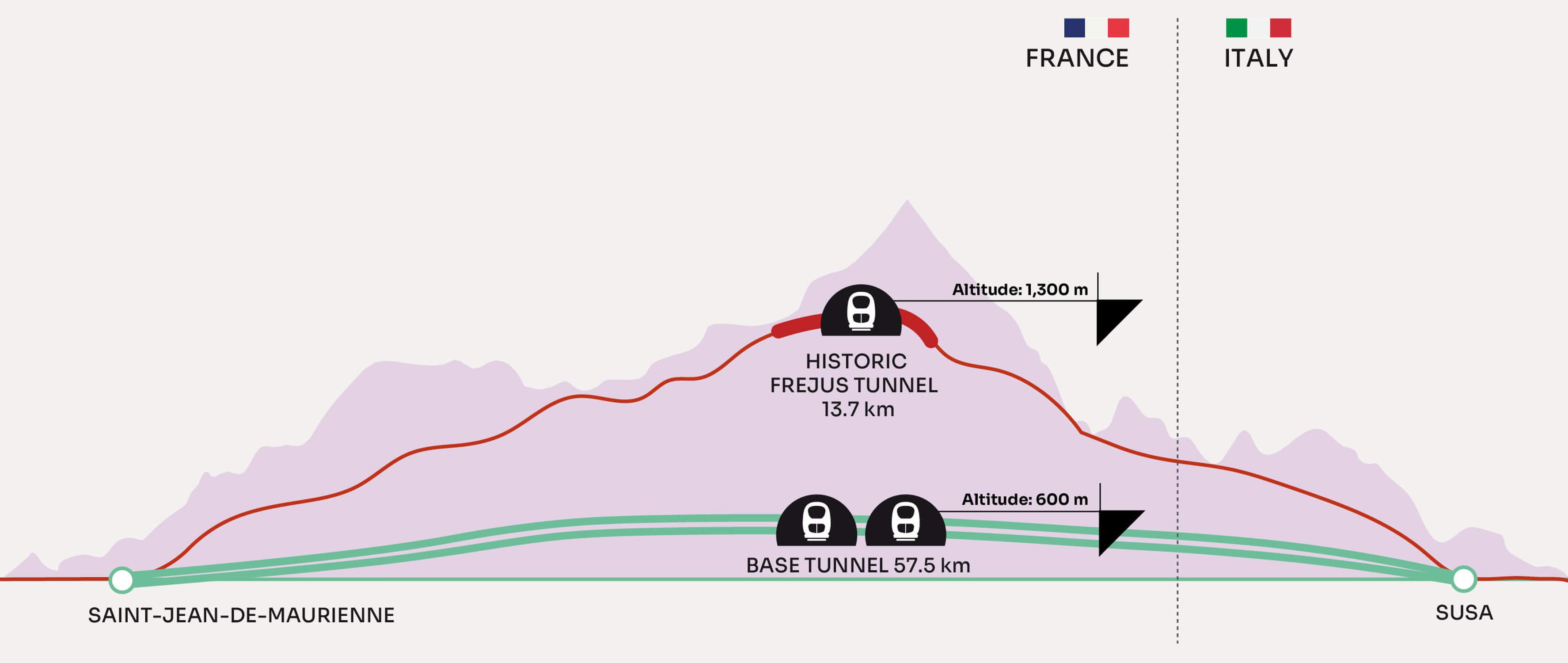
Operational since 1871, the Fréjus tunnel was the first railway crossing the Alps. Today, this infrastructure is no longer able to meet current mobility requirements and new international safety standards since it has a single 13.7-km-long tunnel, a steep gradient and limited capacity.
57,5 km
The new line
The future Mont-Cenis base tunnel will enable passenger and freight trains to cross the Alps safely, at a maximum altitude of 600 metres. This new infrastructure will reduce the impact on the landscape, increase journey speeds and cut energy consumption by nearly 40 per cent.
Building a single European infrastructure
TELT, a single binational project manager, unique in Europe
TELT (Tunnel Euralpin Lyon Turin) is the French Italian company responsible for:
- The construction of the cross-border section
- The application of a common regulation framework to both countries
- Ensuring quality, safety and environmental integration
- Ensuring the management of the future cross-border section
- Dialogue with local communities and stakeholders
Governance:
50 % owned by the French state  50 % owned by the Italian state, through Ferrovie dello Stato Italiane (FS Group)
This binational structure enables effective coordination and the implementation of best practices in terms of safety, environmental protection and market transparency.
The Mont Cenis base tunnel
The heart of the project: an exceptional engineering work allowing faster and more sustainable travel across the Alps.
The main structure of the cross-border section is the new Mont Cenis base tunnel, a complex system consisting of two parallel tunnels, both of which are 57.5 km long, for the passage of passenger and freight trains. It also includes 204 communication bypasses connecting the two tunnels every 333 metres, 4 access adits, three access adits on the French side and one on the Italian side.
These access adits play a crucial role: they serve as access routes during construction, and they will be used for maintenance, rescue access and ventilation during the operation of the line.
Key figures
0 km
for each parallel tunnel
0
safety by-passes
The 57.5-km-long twin-tube Mont Cenis base tunnel will be the longest railway tunnel in the world.
A single construction site: 12 coordinated construction sites
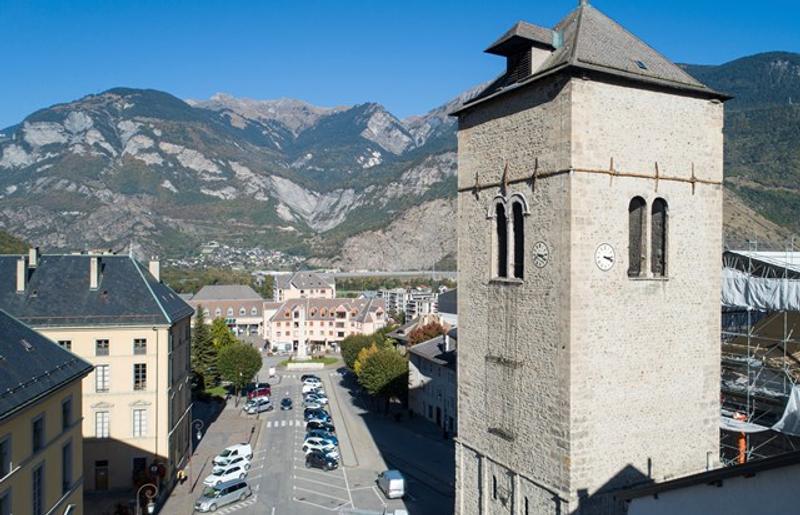
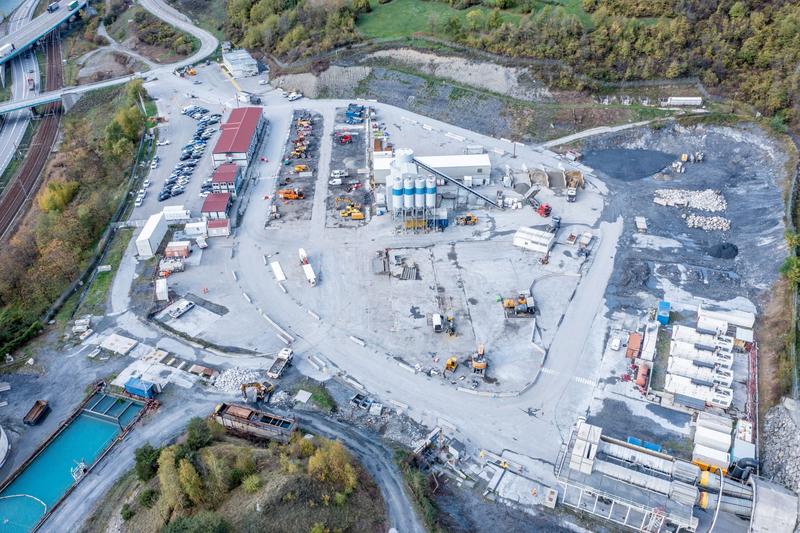
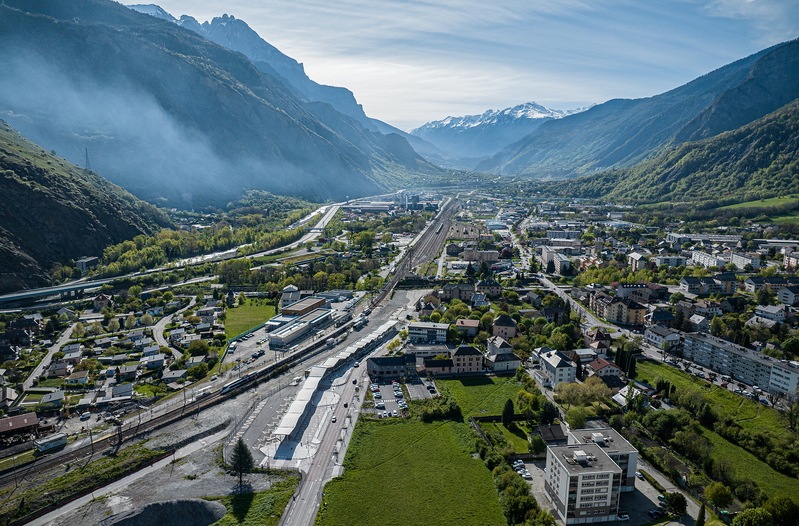
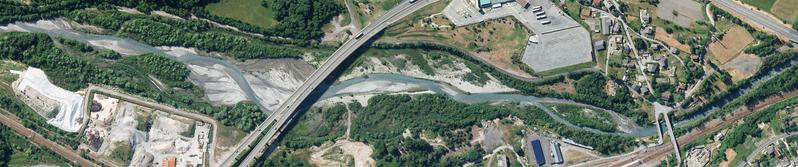
The cross-border section is organised into 12 operational construction sites grouped together under a single French-Italian construction site.


Some key figures
More than
0 skilled workers
Up to
0 % of the rock extracted
is reused as part of a circular economy approach
0 TBMs
deployed
An excavation rate of up to
0 km per month
Focus on the work
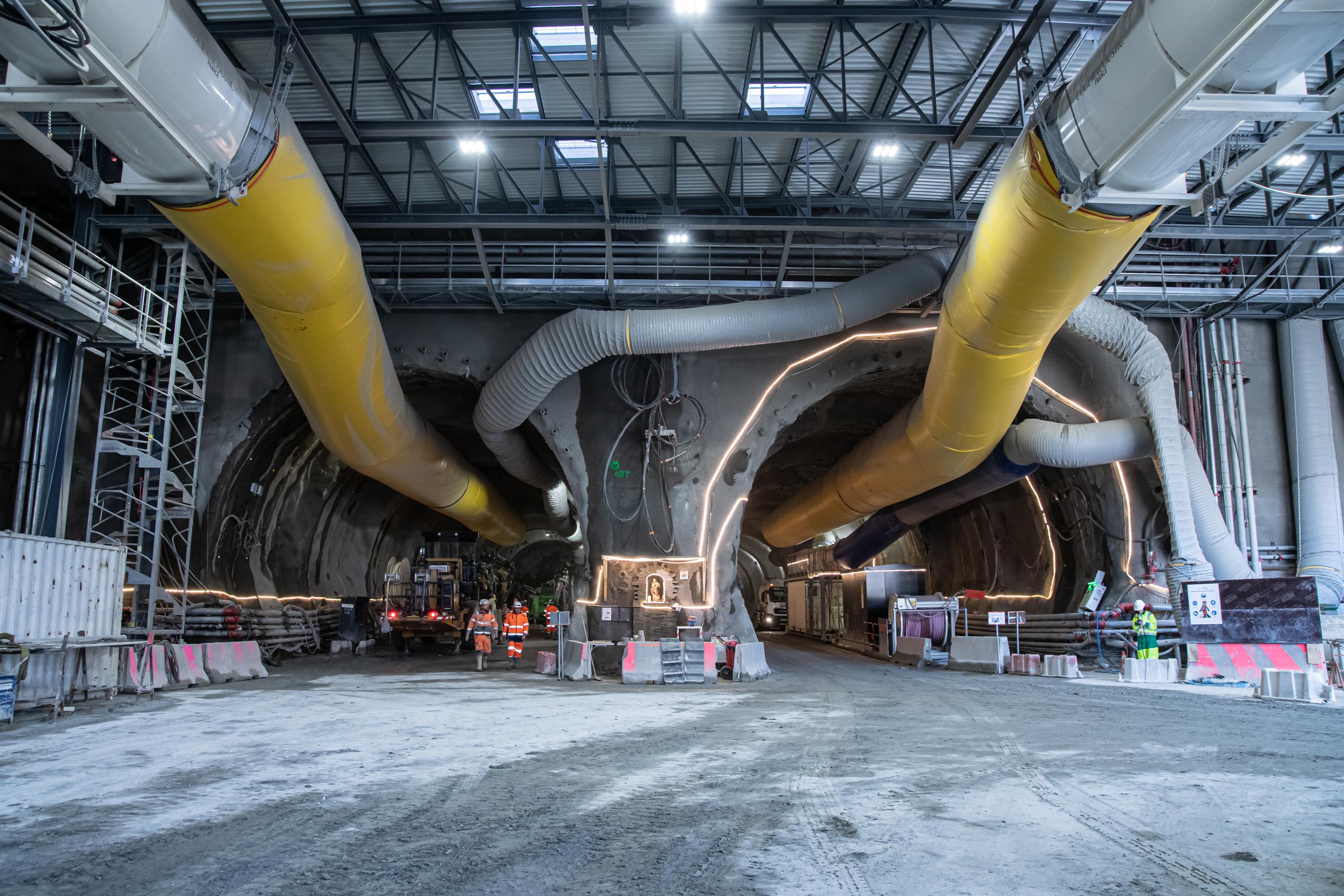
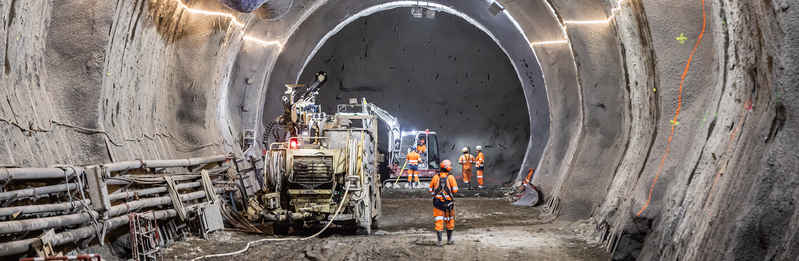
To build the two parallel tubes of the Mont Cenis base tunnel (115 km in total), excavation is performed from several access points, known as adits. These access adits are currently used for construction, but will be used in the future for tunnel maintenance and as emergency exits.

7 tunnel boring machines in operation
The works are carried out primarily using tunnel boring machines (TBMs), highly precise machines capable of excavating quickly and safely beneath the Alps. Where geological conditions require it, conventional excavation methods complement this approach. At the peak of activity, seven TBMs will be operating simultaneously, with an average advance rate of 10 to 15 metres per day.
a total of 164 km
of tunnels will be bulit
4 ventilation shafts in Avrieux
The underground works also include the excavation of the Avrieux ventilation shafts, which have been dug at great depth to ensure ventilation and safety in the future tunnel.
Above Ground Works
Along with the base tunnel, the new line requires adaptations and new above-ground structures: the new international stations in Susa and Saint-Jean-de-Maurienne – crucial local hubs for the project – as well as bridges, buildings for traffic management, maintenance and safety, and interconnection with the existing line.
A sustainable, regional project open to the public
The advantages of the project

For the environment
The project will free the Alpine roads between Italy and France...

For the economy
As part of the Mediterranean Corridor of the Trans-European Transport Network (TEN-T)...

For freight transport
The new infrastructure is compliant with international...

For passangers
The base tunnel will reduce travel times, providing a competitive...

For European mobility
The Lyon-Turin line is of strategic importance for the entire Mediterranean corridor...

For the development of the territories
The new line will contribute, starting from the construction phase, to the dynamism...
The reuse of excavated materials
Adopting an innovative approach to the circular economy in the infrastructure sector, up to 60% of the rock extracted during the excavation is directed to processing sites where it is transformed for reuse as railway embankments and tunnel lining segments. After mechanical and chemical checks, the remaining part is used for environmental rehabilitation or rewilding of abandoned quarries.
Up to 50% of the rock extracted is reused for the construction of the project.
A project serving local communities
The project contributes to the economic vitality of the Maurienne, the Piedmont and the Alpine valleys, through:
- Local jobs
- Training programmes
- Integration into the urban landscape and heritage
- Two modern international stations: Saint-Jean-de-Maurienne and Susa
France
Démarche Grand Chantier, an initiative led by the French State
Italy
Regional Law on Construction Sites-Development-Territory
Discover and explore the project
Exhibitions, models, multimedia: everything you need to understand the challenges of the Lyon-Turin project and follow the progress of the construction site.

 Modane