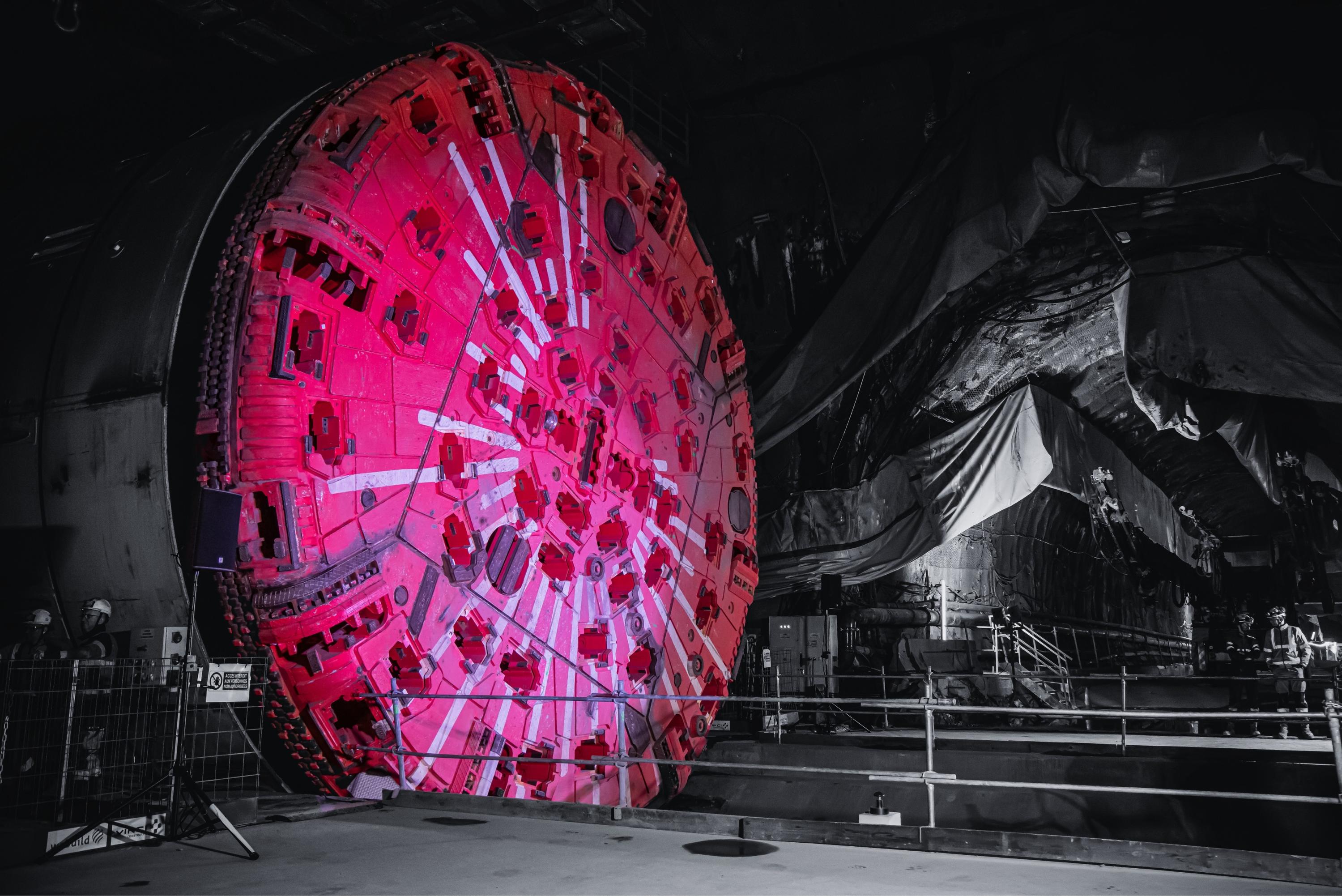
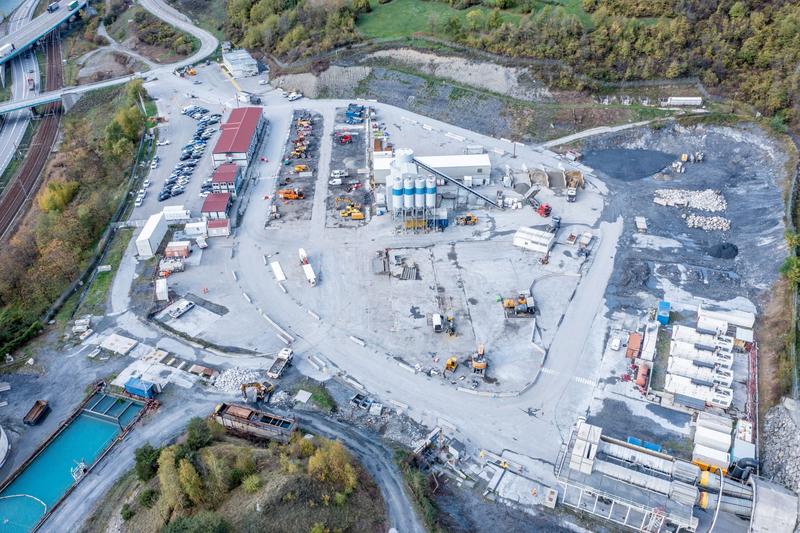
The construction of the cross-border section of the Lyon-Turin line is divided among 12 operational construction sites, grouped together in a “single” bi-national construction site.


Overall progress of the works: August 2026
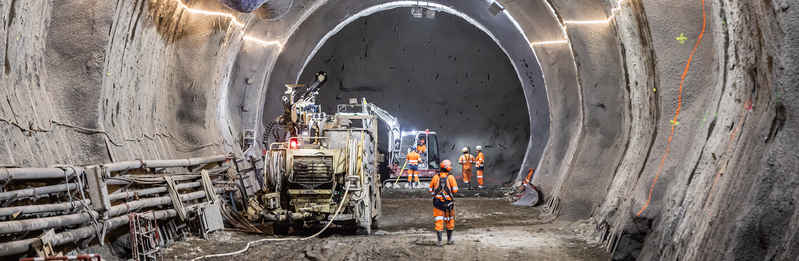
49.2 km of tunnels excavated
30.1%
View the interactive map of operational construction sites
The reuse of excavated materials
The excavation of the Mont-Cenis Base Tunnel generates large quantities of materials. Their recovery and reuse help optimise the works while limiting their environmental impact.
Adopting an innovative circular economy approach, 50 to 60% of the excavated materials are recovered and processed for reuse in railway embankments and tunnel segment production. The remaining materials, after appropriate mechanical and chemical testing, are used for the restoration of disused quarries.
0 %
of the excavated material is reused
Underground Works
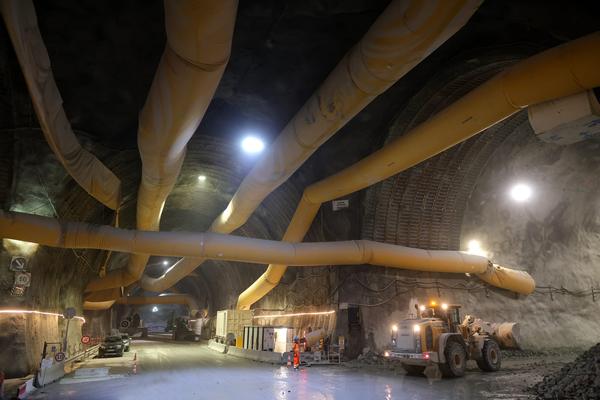
To build the two tubes of the base tunnel (115 km in total), excavation is performed from several access points, known as adits. These access adits will be used in the future for tunnel maintenance and as emergency exits. Underground, the works are carried out using the mechanised method, using big Tunnel Boring Machines (TBM), which ensure speed and safety, or the traditional method, i.e. explosives or pneumatic drills, in the most delicate geological parts.
7 tunnel boring machines in operation
The works are carried out primarily using tunnel boring machines (TBMs), highly precise machines capable of excavating quickly and safely beneath the Alps. Where geological conditions require it, conventional excavation methods complement this approach. At the peak of activity, seven TBMs will be operating simultaneously, with an average advance rate of 10 to 15 metres per day.
a total of 164 km
of tunnels will be bulit
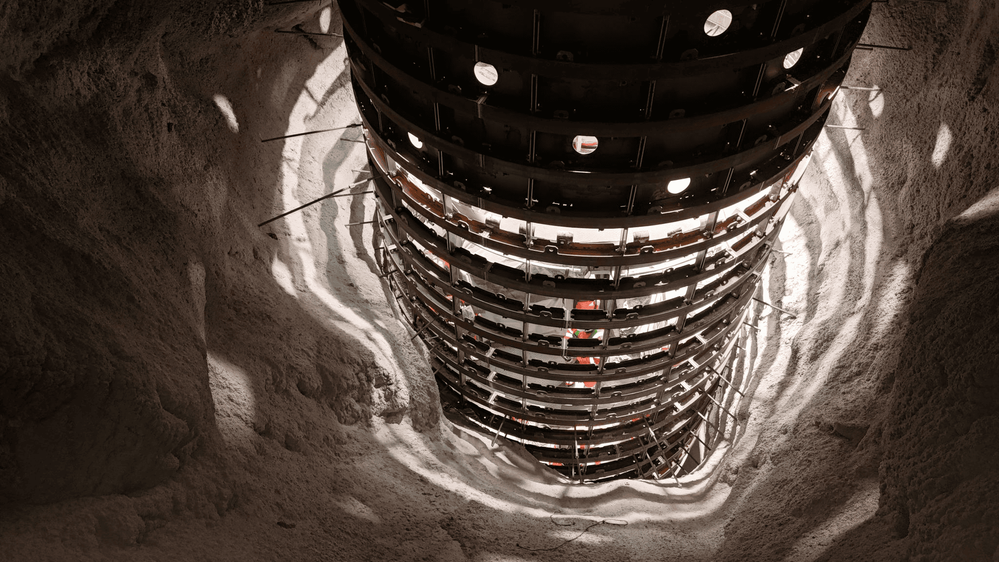
4 ventilation shafts in Avrieux
The underground works also include the excavation of the Avrieux ventilation shafts, which have been dug at great depth to ensure ventilation and safety in the future tunnel.
Above Ground Works
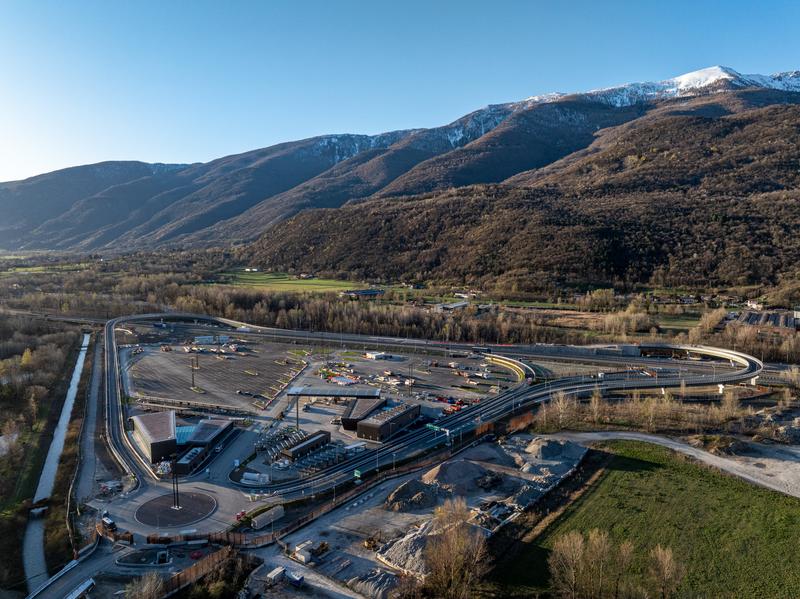
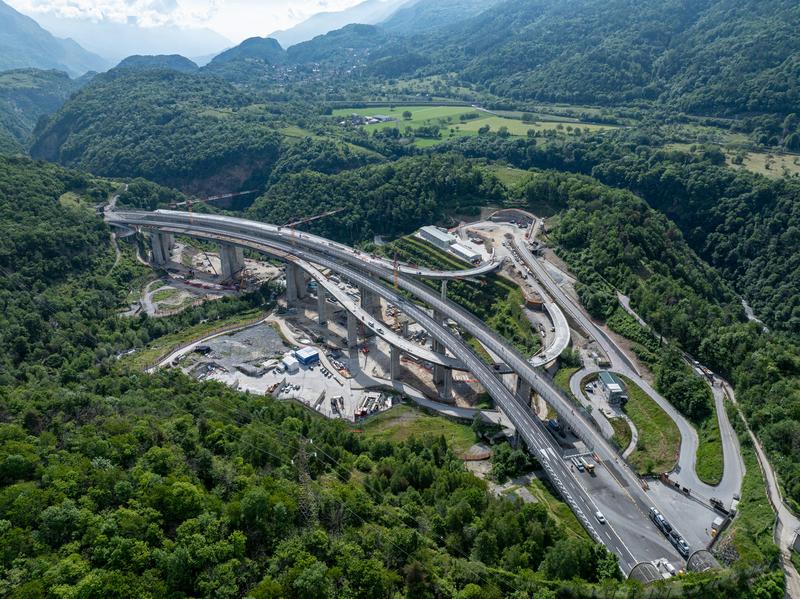
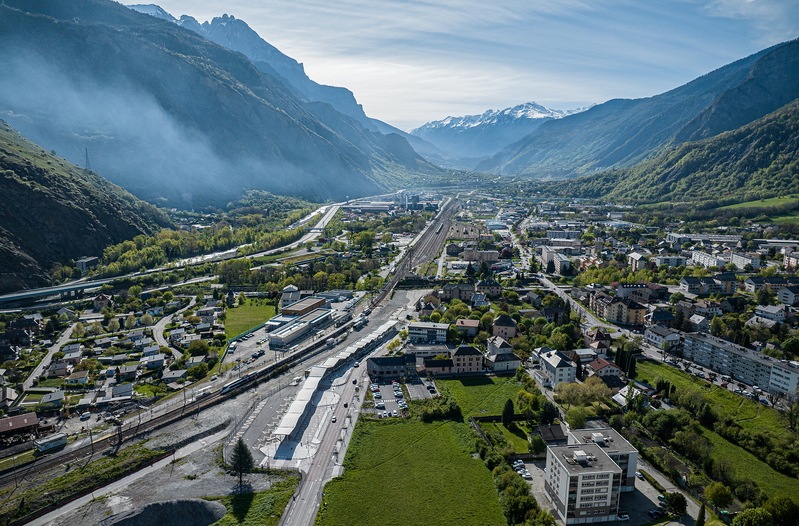
Along with the base tunnel, the new line requires adaptations and new above-ground structures: the new international stations in Susa and Saint-Jean-de-Maurienne – crucial local hubs for the project – as well as bridges, buildings for traffic management, maintenance and safety, and interconnection with the existing line.
TELT | Completion of excavation for the fourth ventilation shaft
Environmental monitoring
The cross-border section of the Lyon-Turin line has passed the scrutiny of environmental impact assessments, which have been conducted in accordance with Italian and French regulations. The competent authorities have then included requirements that the construction companies must comply with, regularly reporting to TELT and the regional and national agencies responsible for monitoring.
The construction sites are monitored 24 hours a day by monitoring stations that measure 135 different environmental parameters (water, dust, asbestos, radon, etc.) under the supervision of national control bodies, to ensure the respect of the territory and the health of workers and citizens.
The “Environmental Coordinator” (COE) is a third party introduced by TELT for ensuring a consistent approach across all operational construction sites.
The base tunnel and its associated infrastructure
The base tunnel
The construction sites for the Mont Cenis base tunnel are operational in the two countries. The base tunnel, the main work for the cross-border section, is a complex infrastructure, consisting of:
The access adits
The access adits are three on the French side (Villarodin-Bourget/Modane, La Praz and Saint-Martin-La-Porte) ; one on the Italian side (Chiomonte). In total, the access adits constitute approximately 18 km of tunnels that will be used both for the construction and maintenance of the base tunnel and as emergency exits.
The stations
The project for the cross-border section of the Lyon-Turin line includes two international stations, located each a few kilometres outside the base tunnel: in Saint-Jean-de-Maurienne, France, and in Susa, Italy.